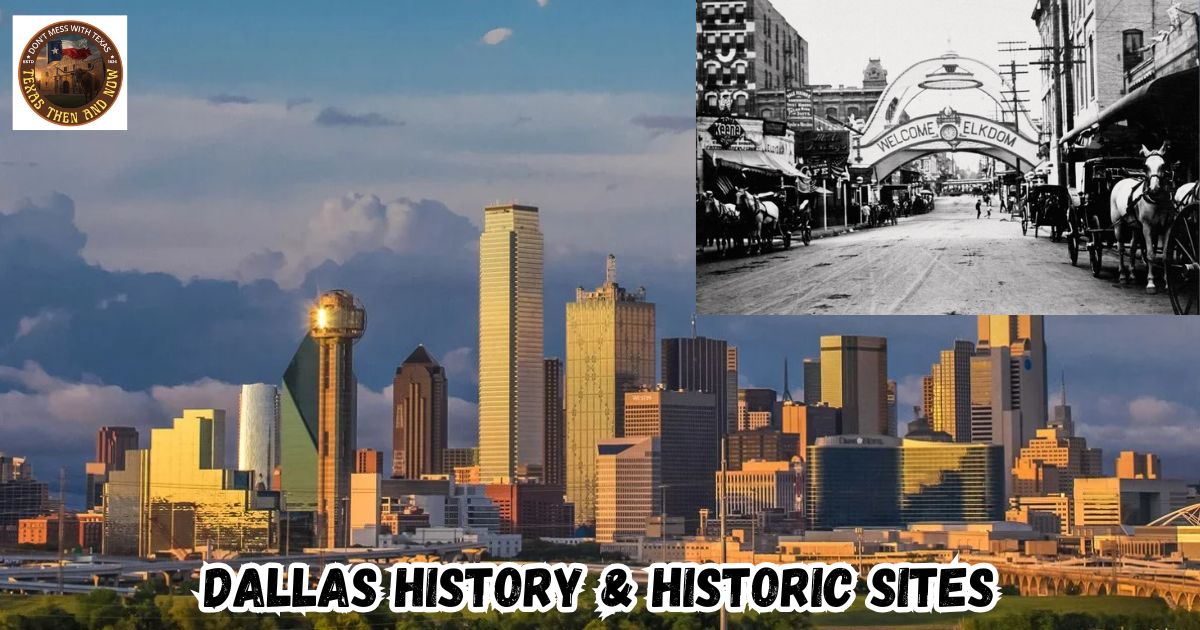
Dallas buzzes with a layered history that shapes the city’s energy and vibe even today. From its founding in 1841 to its official incorporation in 1856, Dallas has grown from a frontier trading post into a sprawling metropolis driven by banking, oil booms, and waves of cultural change.
Checking out Dallas’s history isn’t just about peeking at some old buildings. It’s about getting a sense of how a city rises, faces tough times, and reinvents itself. In this guide, I’ll share some of my favorite tales and places from Dallas history that really bring the city’s story to life for locals and visitors alike.
Key Moments in Dallas History
Dallas’s story really gets going in the 1840s, thanks to John Neely Bryan, who set up a trading post along the Trinity River. Its prime location made Dallas a hub for cattle trading, cotton shipping, and, eventually, the bustling railway.
But when oil was struck in East Texas in the early 20th century, the city quickly became a magnet for big business and banking, sparking new growth across the city. By the 1930s, Dallas was establishing its reputation as a place for ambition and bold thinking. Construction transformed the city’s skyline, Fair Park was revamped in Art Deco style, and the population kept booming.
The decades that followed saw continued expansion, new waves of diversity, and a highly publicized national moment during the JFK assassination in 1963. These turning points left their mark and still influence the city’s landscape and identity today.
Top Dallas Historical Sites Worth Checking Out
Dallas history isn’t something that stays tucked away in books. Instead, you can walk the same streets where key moments happened, exploring buildings and neighborhoods that still pulse with stories from the past. Here are some can’t-miss spots that show off Dallas’s past and colorful changes over time.
- Dealey Plaza & The Sixth Floor Museum: This world-famous spot marks President Kennedy’s assassination in 1963. Dealey Plaza is recognized as a National Historic Landmark, and the Sixth Floor Museum inside the old Texas School Book Depository breaks down JFK’s life along with the events of that day. It offers a clear window into one of America’s most pivotal moments.
- Old Red Museum (Old Red Courthouse): Built in 1892, this eye-catching red sandstone courthouse is now an all-in-one museum. It covers pioneer life, Dallas’s rapid business booms, and modern changes. It’s easy to spot in the heart of downtown.
- Dallas Heritage Village at Old City Park: For anyone who loves a “stepping back in time” vibe, Heritage Village transports visitors to the 1800s. You’ll wander pine-shaded paths and check out Victorian homes, old-school shops, and churches brought in from all over North Texas.
- Texas Theatre: In Oak Cliff, this vintage theater isn’t just a great place for classic films; it’s where Lee Harvey Oswald was nabbed by police after JFK’s assassination. Fans of history and old movies alike enjoy the atmosphere here, with a real sense of living history.
- Fair Park: Known for its Art Deco gems, brilliant murals, and the home of the State Fair of Texas, Fair Park also boasts the Hall of State. This spot shines a light on Texas legends and houses unique artifacts.
- Freedman’s Cemetery Memorial: A deeply meaningful and sometimes overlooked site, this memorial stands where Dallas’s post–Civil War Black community created a burial ground. Detailed sculptures and informative panels remember the struggles and triumphs of Dallas’s African American pioneers.
- Bonnie and Clyde Gravesites: These notorious figures from the Great Depression have their final resting places in West and South Dallas. Visiting their graves brings a bit of outlaw legend into Dallas’s bigger history story.
- Deep Ellum: This gritty, colorful neighborhood built its reputation as a center for Black culture and blues music. The murals and venues speak to its past and ongoing role as a creative heart of the city.
Pioneers, Founders & Dallas’s Early Days
Dallas began with grit—a small crew of settlers setting up near today’s downtown, determined to make something new along the Trinity River. You’ll still find the John Neely Bryan Cabin (a replica) as a reminder of those beginnings. The city’s earliest residents included merchants, independent Black Texans, and a range of visionaries.
Check out Founders Plaza for a fast look at the city’s originals. Along with the cabin, you’ll spot monuments, plaques, and historical buildings that sketch out Dallas’s first steps, including the showstopping Old Red Courthouse. It’s a perfect spot for a quick photo or to mull over how much Dallas has changed.
Recommended Reading and Resources:
Cattle Drives, Cowboys & Pioneer Plaza
Pioneer Plaza pops up as a unique city park brimming with giant bronze longhorn sculptures and cowboys. The artwork is jaw-dropping and highlights Dallas’s legacy as a cattle town at the edge of the Texas frontier. The park, filled with trails and waterfalls, sits close to the massive Kay Bailey Hutchison Convention Center, itself a historic and modern hub for Dallas gatherings. Kids and adults alike find plenty to check out here—whether art, history, or both.
Neighborhoods That Shaped Dallas
Some sections of Dallas are like open-air museums. Deep Ellum started in the late 1800s as a zone of Black businesses and homes, soon becoming famous for live jazz and blues. Today’s festivals and vivid murals are reminders of what was once a buzzing epicenter for music lovers and nightlife seekers.
The Swiss Avenue Historic District gives a different taste of Dallas’s past, showing off elegant houses built in the early 1900s by the city’s growing elite. Taking a stroll here—especially during the annual home tour—feels like walking onto a movie set from another time.
Then there’s Bishop Arts District, where classic storefronts meet modern boutiques and restaurants. This area combines Dallas’s historic flavor with a burst of fresh creativity, making it a hotspot for locals and newcomers alike.
Deep Roots: African American Heritage & Freedman’s Towns
After the Civil War, Dallas was dotted with Freedmen’s towns, where newly freed people built tight-knit communities. The best-known, “Freedmantown,” is now remembered at the Freedman’s Cemetery Memorial north of downtown. Although most of the original neighborhood was bulldozed for new highways, the memorial, with its powerful artwork and historical plaques, keeps these important stories visible for all to learn from.
Head over to South Dallas to visit the Juanita J. Craft Civil Rights House. Legendary activist Juanita Craft made this her home, which now operates as a museum. The exhibits there shed light on decades of civil rights efforts and inspire visitors with the ongoing story of Dallas’s fight for justice and equality.
Dallas’s Unique Icons & Landmarks
There are some things every Dallas local instantly points out with pride. The glowing neon Pegasus on top of the Magnolia Hotel has been a downtown beacon and long-running mascot since the 1930s. Reunion Tower’s big, illuminated “ball” gives the city its signature skyline silhouette. And, wherever you look—from postcards to murals—the red flying horse marks Dallas as a city that knows how to mix nostalgia with style.
Quick Dallas History Facts
- Founded: 1841 (incorporated in 1856)
- Main Growth Drivers: Cotton trading, railway arrival (1870s), East Texas oil boom (1930s)
- Pegasus Symbol: First lit up the Magnolia Oil Building in 1934—now a Dallas icon
- Art Deco Capital: Fair Park claims the world’s largest intact collection of 1930s Art Deco buildings
- Civil Rights Ties: Dallas’s legacy in African American education, business, and activism is on full display at places like the Craft House, Freedman’s Memorial, and various local businesses.
Dallas’s Role in the Kennedy Assassination
For better or worse, Dallas’s history is forever linked with November 22, 1963—the day President John F. Kennedy was assassinated on Elm Street. Dealey Plaza and the blocks nearby draw visitors from around the world, offering a thoughtful mix of museums, memorials, and guided tours. These sites aim to give full context, sticking to the facts amidst all the rumors and theories.
The John F. Kennedy Memorial Plaza, a striking white cenotaph downtown, was built as a quiet place for people to reflect. Even today, this site draws those who want to connect with history, true crime intrigue, or the tumult of 1960s politics.
FAQs about Dallas History & Historical Sites
What’s the oldest building still standing in Dallas?
Old Red Courthouse (from 1892) is one of Dallas’s most iconic structures. While the John Neely Bryan Cabin downtown is a replica, it marks the start of the city’s pioneer era in 1841.
Which Dallas historical sites are open to the public?
You can visit highlights like Dealey Plaza, Pioneer Plaza, Heritage Village, and the Freedman’s Memorial for free. Some museums charge admission, so check ahead if you plan to go inside.
Why is the Pegasus such a Dallas symbol?
The Pegasus sign went up in 1934 on the Magnolia Oil building and quickly became a sign of hope and growth. Its unique design and vivid color helped it stick as Dallas’s “mascot”, forever lighting up the sky downtown.
What’s a hidden historic spot worth checking out?
Tucked-away cemeteries like those holding Bonnie and Clyde, or some of the city’s oldest Jewish and pioneer graves, hide behind modern city blocks and add depth to Dallas’s story. Fair Park, when not packed for the State Fair, is a goldmine for exploring 1930s architecture, too
Why Dallas History Still Matters Today
Jumping into Dallas’s story is more than just a hobby. It links you to the local culture, fires up your curiosity, and lets you stumble upon inspirational stories from years gone by. Every restored house, old monument, or vibrant mural helps keep Dallas’s past alive for new generations. Whether you’re a lifelong resident or just getting to know the city, there’s always something new to track down on these historic streets and in these remarkable spots.
Most Recent Articles:
- Texas Folklife Festival: Preserving Traditions
- Rodeo Events That Celebrate Texas Culture

- Texas Historic Cattle Drives And Cowboy Festivals
- Fiesta De La Flor: Honoring Selena And Tejano Heritage

- Battle Of Gonzales Reenactment: Preserving History
- Texas Renaissance Festival: A Historical Experience
As always, stay safe, enjoy the journey, and please try to leave Texas cleaner than you found it. If you have any comments, questions, ideas, or suggestions, please leave them in the comment section below, and I’ll get back to you ASAP. You can follow us on TikTok @texasthenandnow or YouTube @TexasThenandNow for videos of all things Texas.
P.S. Thanks so much for checking out our blog; we really appreciate it. Just so you know, we may receive a commission if you click on some of the links that appear on our site. This helps us keep our content free and up-to-date for everyone. We appreciate your support!
