
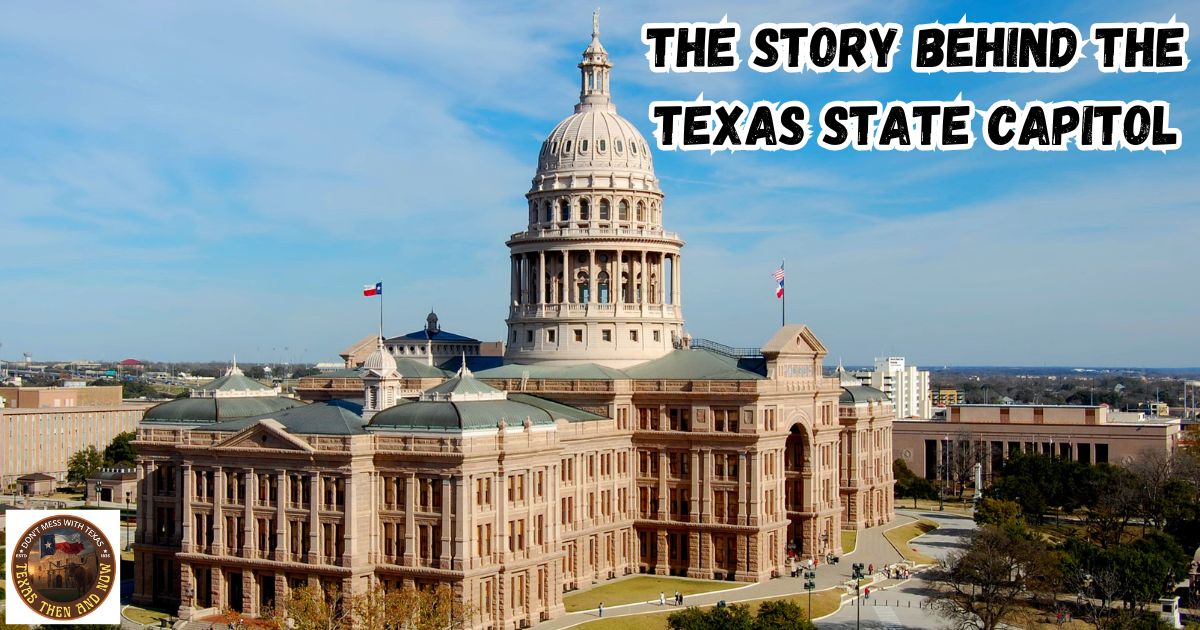
The Texas State Capitol isn’t just a government building standing in downtown Austin. It’s a giant piece of Texas history and has played an iconic role in how people see the state. From the land deals that funded it to its unique pink granite finish, there’s a lot more to this landmark than meets the eye. Here’s how it rose from ashes, became an architectural showpiece, and grew into a symbol that grabs attention every time you drive into Austin.
The Early Days: Dreams, Changes, and Some Wild Weather
The adventure of building the Texas State Capitol goes back to the days of the Republic of Texas in the 1830s. When Texas was its own country, government officials knew they needed a home base they could actually defend and grow. That’s how Austin, back then a tiny frontier town, got its spot as the Capitol in 1839.
Early on, things were pretty basic. The very first Capitol was just a wooden log cabin with not much insulation against the unpredictable Texas weather. President Mirabeau B. Lamar, wanting a location away from coastal threats and smack in the middle of Texas, made the move from Houston official.
That was a big deal; most folks didn’t see Austin as a logical pick, but its location proved strategic later on. As Texas grew, so did its political needs. By 1853, the government built a limestone statehouse. Unfortunately, the design got some tough reviews.
Some publications called it ugly, saying it looked more like a warehouse than a government building. Even so, it stood for almost 30 years before disaster struck. That early Capitol had wide halls and a simple chamber, but it didn’t wow visitors. Still, it was the heart of Texas politics for a generation.
The Great Capitol Fire and the Bold New Plan
In 1881, a fire broke out and destroyed the old limestone Capitol. It was a rough night for Austin, but the state got lucky. Plans for a newer, grander building had just been finished and escaped the flames. Lawmakers quickly decided there would be no makeshift fix this time. Texas needed a capitol worthy of its oversized reputation.
A big building meant big money, and it was clear that Texas wasn’t swimming in cash after the Civil War. So, the state took a bold approach. Lawmakers offered 3 million acres of public land way out in the Panhandle in exchange for the funds to build their new Capitol.
This move created what would become the XIT Ranch, one of the largest cattle ranches on Earth and a major part of Texas cowboy history. This land-for-capitol idea locked Texas into one of its biggest land swaps ever. It helped shape the development of the Panhandle area and kicked off a legend of cattle drives and open spaces. The deal also showed just how willing Texas was to bet big to create lasting symbols.
Building the Texas State Capitol: From Rocks to Ranches
The land-for-capitol deal pulled in enough funding to bring architect Elijah E. Myers from Detroit to Texas. Myers designed the new Capitol in the Renaissance Revival style, which was popular for important government buildings at the time. Construction started in 1882, and the idea was to make something grand—taller, fancier, and far more durable than anything that came before.
At first, contractors picked local Texas limestone for the main stone, but it turned out to weather pretty badly, turning yellow and brittle. Luckily, Granite Mountain near Marble Falls offered a better answer. The owners donated thousands of tons of sunset-red granite, which gave the building its unique pink color.
Getting those massive stones from Marble Falls to Austin was a huge job. Crews built a custom railroad just to haul the granite 60 miles east. The granite’s warm color and shining finish helped the Capitol pop against the Austin sky, and it still turns heads today.
Many locals say the pink granite makes the whole building stand out in every sunrise and sunset, adding to its next-level cool vibe. Each block was cut, polished, and set in place over several years, a process that fascinated Austin residents and drew onlookers from around Texas.
Beyond the materials, the structure’s blueprints focused on safety. Following the destruction of the previous Capitol by fire, designers made sure to add fireproofing features and wide stone corridors, making the whole building safer and longer-lasting than its predecessor. Ventilation shafts and thick walls helped with the brutal Texas summers, and the plentiful windows kept the inside bright.
Labor, Controversy, and Cool Features of the Texas State Capitol
The Capitol project needed over 1,000 workers. Some were convict laborers—a decision that brought plenty of criticism. Most of the fine stonework was done by skilled masons, and hundreds of cutters were recruited from Scotland and the Midwest.
Labor issues grew tense enough that the International Association of Granite Cutters called for a national boycott over the use of convict workers. Despite all this, construction kept moving. On-the-job accidents were unfortunately common due to the tough working conditions, and the stories of these workers add a human element to the Capitol’s backstory.
By the time the building was dedicated in May 1888, it was one of the tallest state capitol buildings in the US, standing out at 302 feet, even taller than the US Capitol in Washington, D.C. The central dome, topped by the Goddess of Liberty statue, can be spotted from all over downtown Austin.
The building boasts 400 rooms, over 900 windows, and a dozen grand staircases carved out of native woods and polished stone. Inside, some eye-catching details wow visitors every day. There’s a circular rotunda right under the dome, with a massive lone star set into the floor’s mosaic tiles.
If you walk through the chambers, you’ll see historic artwork, portraits of every Texas governor, and finely crafted woodwork—especially in the House and Senate chambers. Chandeliers boast designs based on the word “TEXAS,” and brass door hinges are stamped with the same pride.
The Texas State Capitol’s Unique Materials and Attention-Grabbing Style
The sunset-red granite used for the Capitol doesn’t just look cool; it was also a clever way to solve a problem. Local limestone stained quickly and didn’t hold up in the rain, while the granite is tough and holds its color well.
Thanks to those donations and the massive effort to move heavy stones, the Capitol got a finish that stands out from other government buildings. On the inside, there’s lots to take in: mosaic floors, huge portraits of every Texas governor, and a star red centerpiece in the House chamber ceiling.
If you look up at the dome interior, you’ll find a giant Texas star. It’s the kind of style that proves everything is bigger in Texas, even symbols. Details like the star design in the Senate’s ceiling echo the state’s nickname, the Lone Star State, and every visitor is hit with the sense of Texas pride around every corner.
The Capitol building’s gardens and grounds pack their own visual punch, with rows of historic live oak trees and monument-lined walkways connecting different parts of the property. The whole area forms a park-like space in the heart of Austin—making it perfect for strolls and photos any time of year.
Modern Changes and Preservation Efforts
The Texas State Capitol hasn’t just sat frozen in time. Preservation work started picking up in the 20th century, as people realized they needed to keep the building both safe and functional. The building earned a spot on the National Register of Historic Places in 1970 and became a National Historic Landmark in 1986.
These honors help make sure no one tries to mess with its classic look. Space eventually became a big issue. By the 1980s, there were more staff and lawmakers than offices, so Texas got creative. Instead of adding a bulky new addition that would ruin the skyline, designers went underground.
In 1993, a major subterranean extension was finished, doubling the Capitol’s usable space but keeping its famous silhouette unchanged. Another important update: the original Goddess of Liberty statue was swapped out for an aluminum replica in 1986, so the weather wouldn’t ruin her.
If you want to see the original, it’s now at the Bullock Texas State History Museum, right in Austin. Today, the Capitol’s maintenance team keeps everything looking sharp, with restoration projects happening regularly to keep both the exterior and interior in top shape.
Tips for Visitors and Trivia That’s Pretty Fun to Know
- Free tours: Tours run daily (except holidays), and they’re loaded with stories that give you a feel for what went into the building. Guides are friendly and happy to answer questions about everything from architecture to ghost stories.
- Photo spots: The front lawn beneath the trees is great for panoramic shots, and the steps on the south side are perfect for snapping the dome. On sunny days, you can even catch a glint from the dome’s metalwork.
- Amazing echoes: Stand in the rotunda and talk; you’ll hear the echo bounce off the marble walls. It’s a simple trick, but visitors love it.
- Secret underground: The extension isn’t obvious from outside, but it’s open to the public and has some modern displays and extra office space. Take a stroll downstairs for quieter hallways and neat exhibits about state politics.
- Monuments on the grounds: The 22acre grounds around the Capitol feature monuments to everyone from soldiers to heroes of the Texas Revolution. You could easily spend a few hours walking and taking it all in. Each monument has its own backstory, so keep an eye out for plaques that share bits of Texas lore.
Frequently Asked Questions about the Texas State Capitol
What’s the story behind the XIT Ranch and the Capitol?
Texas traded Panhandle land—about 3 million acres—to investors to fund the Capitol. That land became the XIT Ranch, once the world’s largest fenced ranch and a huge part of cowboy legend.
Is it true that the Texas Capitol is taller than the US Capitol?
Yes, the Texas State Capitol stands at 302 feet, making it a good bit taller than the US Capitol in Washington, D.C.
Who was the main architect behind the Capitol?
Elijah E. Myers was chosen for the job; he was known for designing big, impressive government buildings. He nailed that reputation with this one.
What happened to the original Goddess of Liberty statue?
In the 1980s, the weather was wearing down the zinc statue, so it was replaced by a more durable aluminum replica. Now, you can visit the original at the Bullock Museum.
What the Texas State Capitol Means Today
The Texas State Capitol isn’t just a place where laws get made. It’s a reminder of the state’s dramatic history and willingness to go big, from land deals and risky decisions to the distinct pink granite. The Capitol’s doors are open to everyone, and standing inside it, it’s impossible not to feel the weight of all those stories.
Whether you’re a history buff, a curious traveler, or just in town for the food, it’s one spot in Austin that’s always worth checking out. The Capitol stands as proof of Texas pride, its bold spirit, and the idea that everything—stories, buildings, and dreams—really are bigger in Texas.
Most Recent Articles:
- Artists And Writers Who Made Texas Famous

- The Story Behind Texas State Capitol Building

- How Texas Railroads Shaped The State’s History

- Women Who Made Texas History

- Notable Cowboys And Ranchers In Texas History

- Famous Texas Rangers Throughout History

As always, stay safe, enjoy the journey, and please try to leave Texas cleaner than you found it. If you have any comments, questions, ideas, or suggestions, please leave them in the comment section below, and I’ll get back to you ASAP. You can follow us on TikTok @texasthenandnowor YouTube @TexasThenandNowfor videos of all things Texas.
P.S. Thanks so much for checking out our blog; we really appreciate it. Just so you know, we may receive a commission if you click on some of the links that appear on our site. This helps us keep our content free and up-to-date for everyone. We appreciate your support!