
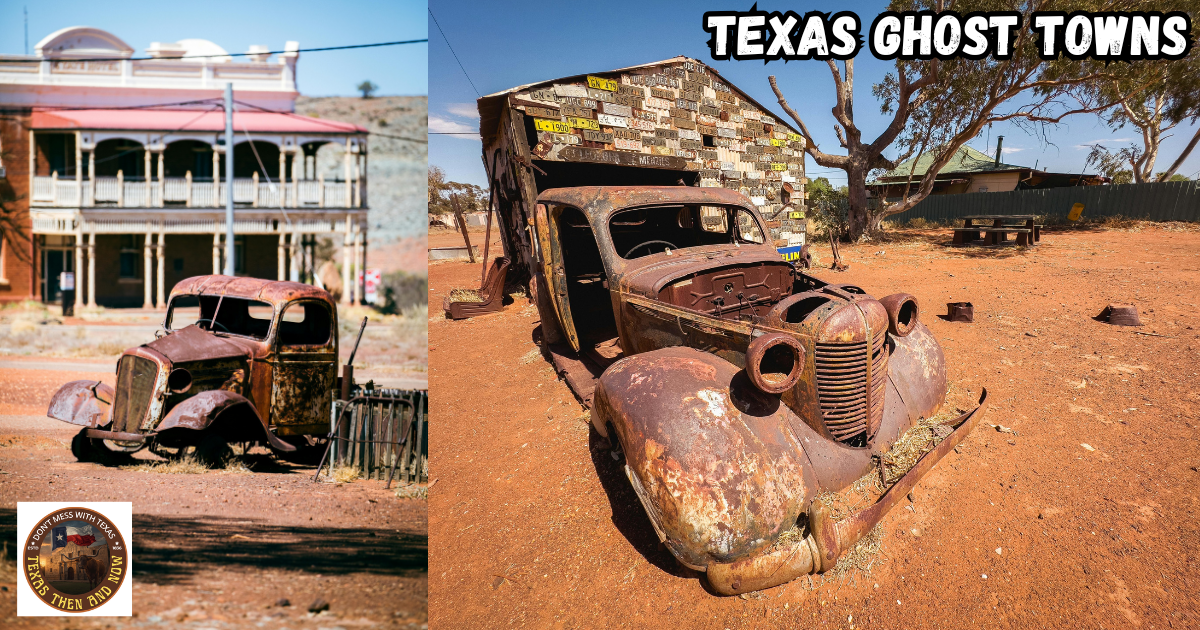
Texas ghost towns are scattered across the plains, deserts, forests, and shorelines, with more than 500 of them dotting the map. These empty shells were once the heartbeat of ranching, mining, railroads, or small farming economies.
But changes came fast and hard, whether it was a boom, a bust, a weather disaster, or just bad luck. Today, these forgotten places offer a quiet window into what life looked like during those uncertain, exciting times in Texas history.
Understanding Texas Ghost Towns: More Than Just Old Buildings
I’ve always thought that exploring Texas ghost towns is a bit like stepping onto the set of an old Western movie, only everything is real. Visiting these sites goes beyond broken-down buildings and lonely cemeteries. Each town has its own backstory, shaped by the gold rush, silver mines, oil discovery, new railroads, and even environmental disasters.
If you’ve ever wondered why so many Texas towns faded away, you’ll find that history here isn’t just about place names—it’s about the wild swings of hope and disappointment that shaped the state’s character. Ranging from completely abandoned to oddly preserved, ghost towns in Texas reflect how people responded to booms in industries like ranching, railroads, and oil, as well as the curveballs thrown by nature.
Some towns even disappeared under lakes or were rebuilt miles away when disasters hit. The legacy left behind is both haunting and thought-provoking, showing us how quickly a thriving place can fade into silence.
Common Reasons for Abandonment
Every Texas ghost town has its own unique story, but a few things tend to show up across the map. Here are the big ones that usually explain why these towns faded into silence:
- Economic Ups and Downs: Many ghost towns in Texas boomed because of silver, copper, or oil, only to be abandoned when the resources dried up or prices fell. This happened in places like Shafter and Thurber.
- Natural Disasters: Weather can be pretty unforgiving in Texas. Indianola was a buzzing port before two hurricanes wiped it off the map. Severe droughts made life unsustainable in places like Lobo.
- Changes in Transportation: The arrival, or rerouting, of railroads could make or break a town. Some places dried up overnight when bypassed by new train tracks or highways (Glenrio is a classic example).
- Social Shifts and Failed Experiments: Some towns started as utopian communities (like La Reunion) or immigrant settlements (such as Norse), but when those dreams fizzled, so did the population.
- Lakes and Flooding: A few towns were purposely flooded to create lakes, leaving their remains underwater until major droughts bring old foundations and tombstones back into view, as seen with Old Bluffton.
What You’ll Actually Find If You Visit
One of the coolest things about ghost towns is how different the remains are from place to place. Sometimes there’s nothing left but a marker and a few stones in a cemetery, while others have entire streets of deserted buildings. Here’s a quick rundown of things you might see:
- Weathered ruins or walls, sometimes covered in graffiti
- Old cemeteries with headstones dating back over a century (Baby Head is an example that sticks in my mind)
- Foundation outlines, remnants of post offices, jails, banks, or general stores
- Faded historical markers explaining just what happened there
- Underwater ruins or resurfacing tombstones after droughts (like those at Old Bluffton on Lake Buchanan)
- Makeshift museums or restored structures, especially in more recently revived places like Terlingua
Not every ghost town is truly abandoned today. Some have been partially restored or repurposed for events, film sets, or even quirky art festivals. Others are simply left to the elements and the occasional visitor. Many of these sites also feature striking vistas, creating an almost otherworldly experience as you walk the empty streets once bustling with life. The contrast between deteriorating walls and the expansive Texas sky adds to the surreal feeling and makes these places unforgettable.
Spotlight: Notable Texas Ghost Towns
It would take a lifetime to visit every ghost town in Texas, but a few have reputations or stories that really deserve a closer look. These are the places I’d put at the top of any travel list, whether you’re a history buff or just after the perfect photo op.
Terlingua (Brewster County)
Terlingua might be Texas’s best-known ghost town, and for good reason. Once a thriving mining center for the mercury-rich mineral cinnabar, it’s now mostly famous for its annual chili cookoff and scenic location right next to Big Bend National Park. When you visit, there’s a historic cemetery, rugged stone ruins, and even a couple of restaurants and guesthouses operating out of restored buildings.
The vibe is spooky, artsy, and a bit wild. Terlingua perfectly blends the spirit of the frontier days with modern-day quirkiness. You’ll also notice artists have left their mark, turning some structures into galleries or unique accommodation.
Indianola (Calhoun County)
This was Texas’ second busiest port after Galveston until hurricanes in 1875 and 1886 turned it into rubble. Nowadays, you’ll only see the courthouse foundations at low tide and some scattered gravestones. Apart from being a ghost town, Indianola’s story is a ground-level history lesson about just how tough life on the coast was back then. A visit here offers a chance to stand where once-thriving trade and immigration shaped Texas’ future—now replaced by whispers of the past carried on coastal winds.
Thurber (Erath County)
Thurber is a former coal mining company town. At its peak, it had thousands of residents and all the amenities, including its unique brick smokestack, which still stands off Interstate 20. The switch from coal to oil wiped out the economy almost overnight. Nowadays, remnants like the smokestack, a museum, and a few scattered structures make it an interesting stop for anyone wanting to get a sense of Texas’s industrial past.
The Grove (Coryell County)
The Grove is something of an exception—it was never fully abandoned, and original buildings like the general store and post office remain in solid shape thanks to ongoing preservation. The town faded when Highway 36 bypassed it, but today you can visit for a living slice of history and even book a ghost tour. The stories from this small community mix tales of cowboys, eccentrics, and the everyday struggles of rural life. The Grove proves that “ghost town” doesn’t always mean empty; sometimes, it means preserved in time.
Glenrio (Deaf Smith County)
Glenrio once welcomed travelers along Route 66 but emptied out after I-40 swept traffic away in the 1960s. Today you’ll see old roadside motels, diners, and gas stations, all slowly being reclaimed by prairie grass and tumbleweed. It’s a textbook example of how modern infrastructure can erase entire towns from the map. Glenrio is a favorite among photographers thanks to its eerie nostalgia and the haunting silence that fills the air.
Offbeat and Underwater: Rare Types of Texas Ghost Towns
Not every Texas ghost town is what you might expect. A few have backstories, locations, or afterlives that make them worth tracking down for anyone who loves a good travel adventure:
- Old Bluffton (Llano County): Flooded to make way for Lake Buchanan in 1937, its foundations resurface during major droughts. Seeing gravestones and stone walls rise from the receding water feels pretty surreal, especially for those interested in sunken history.
- Lobo (Culberson County): This desert town was abandoned in the early 1990s, but artists bought it and now use it for events and experimental film shoots—a very modern twist on the classic ghost town story. The reinvention of Lobo brings together art, community, and a touch of West Texas oddness.
- Toyah (Reeves County): You’ll find the huge, abandoned 1912 schoolhouse still standing, almost like a monument to the days when Toyah buzzed with railroad activity and commerce. The starkness of the remaining buildings and the isolation on the plains make Toyah particularly memorable for anyone seeking a quieter, more contemplative visit.
- Medicine Mound (Hardeman County): After fire and drought, only a few structures remain, including a general store and post office frozen in time. The landscape around the mounds is both beautiful and mysterious, adding an extra layer of intrigue for explorers.
- Bankersmith (Kendall County): Originally tied to the railroad, Bankersmith is now home to a bat sanctuary and attracts visitors for its quirky style and restored tunnel. This tiny “town” manages to blend abandoned charm with new life from curious travelers and events.
There is even more to seek out. If you’re curious for more, sites like the Texas Ghost Towns A-Z Directory or local travel blogs can help you dig deeper and plan the perfect road trip.
What to Know Before Visiting Texas Ghost Towns
Before heading out, it pays to do a bit of research to make sure you know what to expect. Some ghost towns are on private property, and others are pretty remote without cell service or facilities. Here are a few quick tips I’ve picked up from my own road trips:
- Double-check if access is allowed (some spots need permission or have posted hours).
- Bring plenty of water and supplies—the Texas sun doesn’t mess around.
- Wear sturdy shoes and watch for wildlife, especially in rural, overgrown areas. Watch for insects and snakes that love hiding in old buildings or tall grass.
- Pack a camera or sketchbook, since you’ll find moments you’ll want to remember. Documenting your visit can help preserve details for others who share your passion for history.
- Read up on town history before you go. Knowing a bit of the backstory makes visiting way more interesting and helps you spot important ruins or sites you might have missed otherwise.
It’s always a smart idea to tell someone where you’re going and estimate how long you’ll be out, especially when your adventure takes you into remote areas with patchy cell service. A little planning goes a long way in making sure you have a safe, enjoyable outing. Most of all, be respectful—don’t take souvenirs or disturb fragile ruins, and tread softly wherever you go.
Frequently Asked Questions About Texas Ghost Towns
Curious about planning a trip or just want to know more? Here are a few common questions people ask about Texas ghost towns:
Can you visit most Texas ghost towns?
Many ghost towns can be explored, but it depends on the location. Some are on public land or have tourist facilities, while others are on private property or hard to reach. Always check access rules online or with a local contact before heading out to avoid unwanted surprises.
Are there guided tours for any Texas ghost towns?
Yes, some towns like The Grove and Terlingua offer guided or self-guided tours, especially during special events like chili cookoffs or Halloween. It’s a nice way to dig deeper into the local stories and sights, and you might stumble upon unexpected legends or tall tales along the way.
Why did so many Texas towns get abandoned?
Most towns disappeared after their main industry (like mining, ranching, or railroad work) collapsed, or because of storm damage, drought, and even changes to transportation routes. Every abandoned town has its own mix of reasons, which can usually be found on historical markers or online directories. Sometimes the answer lies right in plain sight, empty grain silos, toppled water towers, or a long stretch of unused railroad track.
Texas Ghost Towns: Frozen Time, Living Stories
Exploring Texas ghost towns means getting to know history in a more hands-on, personal way. From rowdy mining camps like Terlingua to serene sunken villages like Old Bluffton, these places keep the state’s wilder chapters alive. A day spent wandering crumbling streets or reading tombstone inscriptions is a reminder that boom-and-bust cycles, and the stories they leave behind, are all part of what makes Texas so interesting to explore.
Staying curious and respectful during your travels helps keep these stories and the land itself around for the next visitor. There’s always another hidden corner or fascinating tale waiting on the Texas backroads, just waiting to be tracked down. So hit the road, keep your eyes open, and let Texas’s ghost towns share their stories with you.
Most Recent Articles:
- Artists And Writers Who Made Texas Famous

- The Story Behind Texas State Capitol Building

- How Texas Railroads Shaped The State’s History

- Women Who Made Texas History

- Notable Cowboys And Ranchers In Texas History

- Famous Texas Rangers Throughout History

As always, stay safe, enjoy the journey, and please try to leave Texas cleaner than you found it. If you have any comments, questions, ideas, or suggestions, please leave them in the comment section below, and I’ll get back to you ASAP. You can follow us on TikTok: @texasthenandnow , or YouTube: @TexasThenandNow for videos of all things Texas.
P.S. Thanks so much for checking out our blog; we really appreciate it. Just so you know, we may receive a commission if you click on some of the links that appear on our site. This helps us keep our content free and up-to-date for everyone. We appreciate your support! Texas’s