
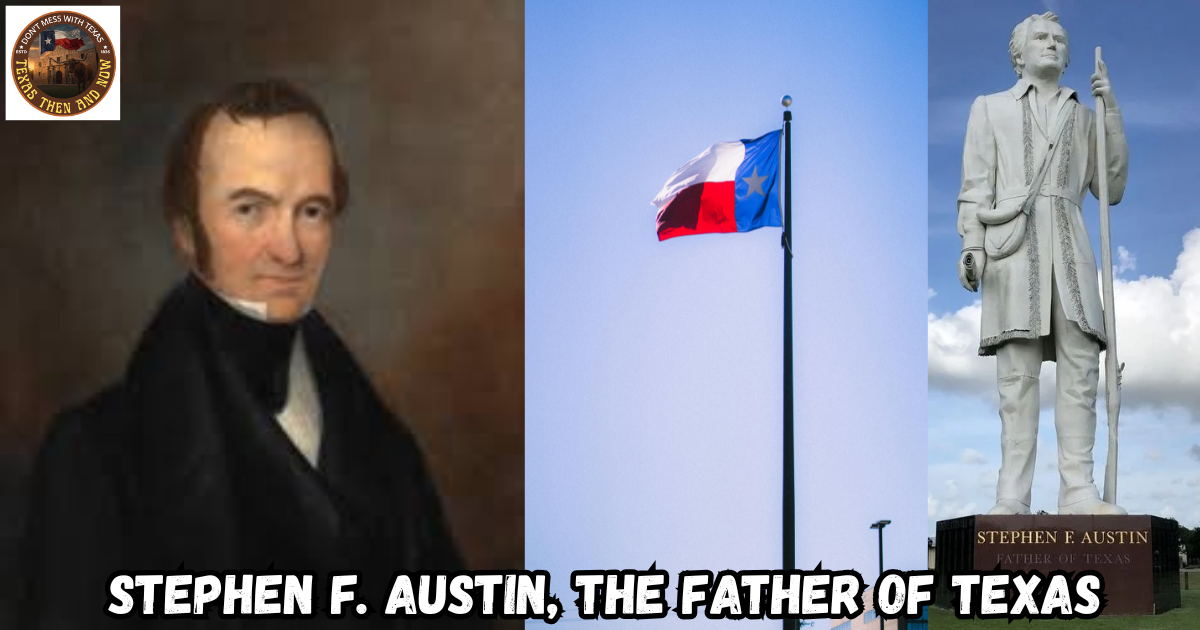
Stephen F. Austin’s life reads like a real adventure, full of family ambition, political struggle, and plenty of determination. He’s recognized as the “Father of Texas” for good reason. His leadership laid the groundwork for an entire state’s history. Let’s check out how he reached that position, why his choices made a difference, and what lessons his story offers about perseverance and smart negotiation in a fast-changing world.
The Early Years and Family Ambitions
Stephen Fuller Austin was born in Virginia in 1793, right at the tail end of the American Revolution. His childhood unfolded under the guidance of his father, Moses, who was constantly searching for new opportunities. The family ended up settling in Missouri, but Moses Austin wasn’t satisfied to stay put.
He hit on the bold idea of moving American settlers into Texas, which at the time was a wild and thinly populated territory under Spanish and later Mexican control. Fate had other plans when Moses passed away before seeing this goal realized, leaving it up to Stephen, who was only 27 years old. Without much warning, Stephen stepped up to carry out his father’s vision.
Pushing forward, Stephen made the challenging trip to San Antonio. There, he negotiated with Mexican officials and secured an empresario contract, giving him legal permission to bring families into Texas. This moment set the stage for everything that was to follow and turned the name Austin into a significant piece of Texas history.
Building a Colony: The Old Three Hundred
Between 1821 and 1824, Austin recruited the first 300 American families, famously known as the “Old Three Hundred,” to settle along the Brazos River. These settlers were mostly farmers looking for new land after dealing with crowded conditions back east. Many hoped to carve out better futures on the Texas frontier.
Austin set up the framework for his community. He organized land grants, wrote out rules, resolved land disputes, and picked a strategic spot for a colonial capital, San Felipe de Austin. Part of his job involved teaching new arrivals how to mix American customs with Mexican law.
These opening years were rough: drought, raids by native groups, and plenty of risk. Through all this, Austin was a steady hand, smoothing out disputes and serving as a go-between for his colonists and the Mexican government.
By working closely with Mexican authorities, Austin made it clear that his settlers would be good citizens. This helped win new contracts to welcome even more American families, turning Texas into a true frontier melting pot and setting the stage for dramatic growth.
Challenges with the Mexican Government
The late 1820s brought fresh challenges. Mexico had just won independence from Spain and was trying to figure out how to manage its large and varied territories. Laws and leadership changed often, and Austin had to stay sharp. He made frequent trips to Mexico City to spell out his colony’s needs and push back on unexpected rule changes, new taxes, and immigration bans that threatened the settlers’ survival.
Mexican leaders sometimes viewed Austin as a nuisance, especially as more Americans poured in. New laws clamped down on U.S. immigration and on the importation of slaves. Austin was left in a tight spot. He had to defend his people’s interests, but he also wanted to avoid open rebellion, always seeking a peaceful solution whenever possible.
The Drive for Statehood and Imprisonment
By 1833, patience was running thin among Texas settlers. They wanted Texas to become its own Mexican state, separate from Coahuila, because they hoped for more local control. Austin headed to Mexico City to present their case, holding out hope for a positive reception.
While he waited, a letter he had sent back home was intercepted by Mexican officials. They arrested Austin on suspicion of stirring up rebellion and tossed him in jail for nearly two years, without formal charges. This stretch in prison broke Austin’s health and wore down his hope for compromise.
Once a champion of peaceful coexistence, Austin started doubting whether Mexico’s government would ever negotiate seriously. When he returned to Texas in 1835, both he and the political landscape had changed, setting the scene for even bigger confrontations.
Role in the Texas Revolution
Back in Texas, Austin found a mood of impatience among the settlers. Most were ready to defend their homes and rights by force if needed. Though he preferred negotiation, Austin agreed that petitions had run their course.
He was elected to lead the Texas volunteer army, becoming its first overall commander at the onset of the Texas Revolution against Mexico. Though not a trained soldier, he was able to keep different groups, each with its own priorities, working toward a single goal.
Very quickly, Austin saw how important outside support and funding would be. To get this help, he journeyed to the United States to ask for volunteers and raise money. His efforts boosted the resources available to those pushing for Texas independence and helped keep the cause alive during its toughest moments.
Austin and the Republic of Texas
Following the stunning victory at San Jacinto in April 1836, everything changed in Texas. The region swiftly declared itself an independent republic and formed a new government. Austin jumped into politics, running for president of the young nation, but Sam Houston was the popular favorite and won by a landslide.
Austin was appointed as the Republic’s first Secretary of State under Houston, thanks to his experience and knowledge of both Texas settlers and Mexican officials. Although he didn’t hold the presidency, Austin took charge of much of the new government’s diplomatic work.
He worked to build connections with Mexico and the United States, hoping for peace and recognition. Sadly, after just two months in office, Austin passed away due to pneumonia at age 43—his sudden death cutting short his influence on the new nation he helped make real.
What Made Stephen F. Austin’s Leadership Unique?
Stephen F. Austin wasn’t just another pioneer; he was a skilled negotiator and a reliable leader who could keep his community focused through rough times. He deftly balanced the needs and laws of two cultures, believing that survival depended on staying in good standing with the Mexican government. Austin cared about long-term stability and put a lot of time into building solid local government and carefully planned towns.
One of the boldest things Austin did was work inside Mexico’s system for years, sometimes bending to new rules but always pushing back for his settlers when it counted. Even after being jailed, he still spoke up for compromise instead of jumping straight to war. His approach stands out today, admired by both historians and Texans for its balance and patience.
Legacy in Modern Texas
Stephen F. Austin’s impact lives on all across Texas. The city of Austin, chosen as the capital by the young republic’s government in 1839, is just the start. Schools, colleges, parks, and city roads all carry his name—a constant reminder of his influence.
The example Austin set by hunting for new opportunities while showing respect for existing cultures still holds up as a valuable lesson for leaders today. He faced defeat and frustration but always kept his colony’s interests at the center of his decisions, a legacy that’s right at home in Texas, where the fiercely independent spirit remains alive and well.
If you head to modern Texas, you’ll stumble upon statues, museums, or local festivals that celebrate Austin’s legacy. His life and work are sometimes highlighted in schoolbooks and Texas history courses, with teachers and students alike reflecting on how his brand of leadership remains relevant today, especially in balancing growth, compromise, and standing up for a community’s best interests.
Some Common Questions About Stephen F. Austin
Why is Stephen F. Austin called the Father of Texas?
He earned this title by leading the first group of American settlers into Texas, helping them fit in, and laying down systems for towns and governance. Austin also represented his people through political channels, both before and during the Texas Revolution, becoming the voice and advocate for the emerging Texas identity.
What kind of settlers made up the Old Three Hundred?
The Old Three Hundred were mainly farming, crafts, and trade families from the southern United States looking for new opportunities on the Texas frontier. Each was offered enough land for a real start in agriculture or ranching, making for stable, sustainable communities right from the beginning.
What problems did Austin face with the Mexican government?
Austin had to deal with frequent changes in Mexican law, rising suspicions about the American settlers, and hotly debated issues like slavery and who controlled local decisions. His arrest in Mexico City was just one tough chapter in his ongoing struggle to keep the peace and find common ground.
How did Austin’s imprisonment affect his actions later?
Being locked up by Mexican authorities convinced Austin that peaceful negotiations weren’t likely to work anymore. He shifted from behind-the-scenes diplomacy to front-and-center support for Texas breaking away and going its own way.
Remembering Austin’s Impact
Stephen F. Austin’s story is all about strong will, steady guidance, and thoughtful compromise. His achievements stand out, but it’s the patient, practical style he used to solve problems that makes his memory shine.
Texans still honor him for what he managed to pull off and the measured, balanced approach he brought to the table. That’s why, through schools, cities, and the state’s capital itself, Austin’s legacy is always present—a reminder to value level-headed leadership even when the pressure is on.
Most Recent Articles:
- Artists And Writers Who Made Texas Famous

- The Story Behind Texas State Capitol Building
- How Texas Railroads Shaped The State’s History

- Women Who Made Texas History

- Notable Cowboys And Ranchers In Texas History

- Famous Texas Rangers Throughout History

As always, stay safe, enjoy the journey, and please try to leave Texas cleaner than you found it. If you have any comments, questions, ideas, or suggestions, please leave them in the comment section below, and I’ll get back to you ASAP. You can follow us on TikTok @texasthenandnowor YouTube @TexasThenandNow for videos of all things Texas.
P.S. Thanks so much for checking out our blog; we really appreciate it. Just so you know, we may receive a commission if you click on some of the links that appear on our site. This helps us keep our content free and up-to-date for everyone. We appreciate your support!