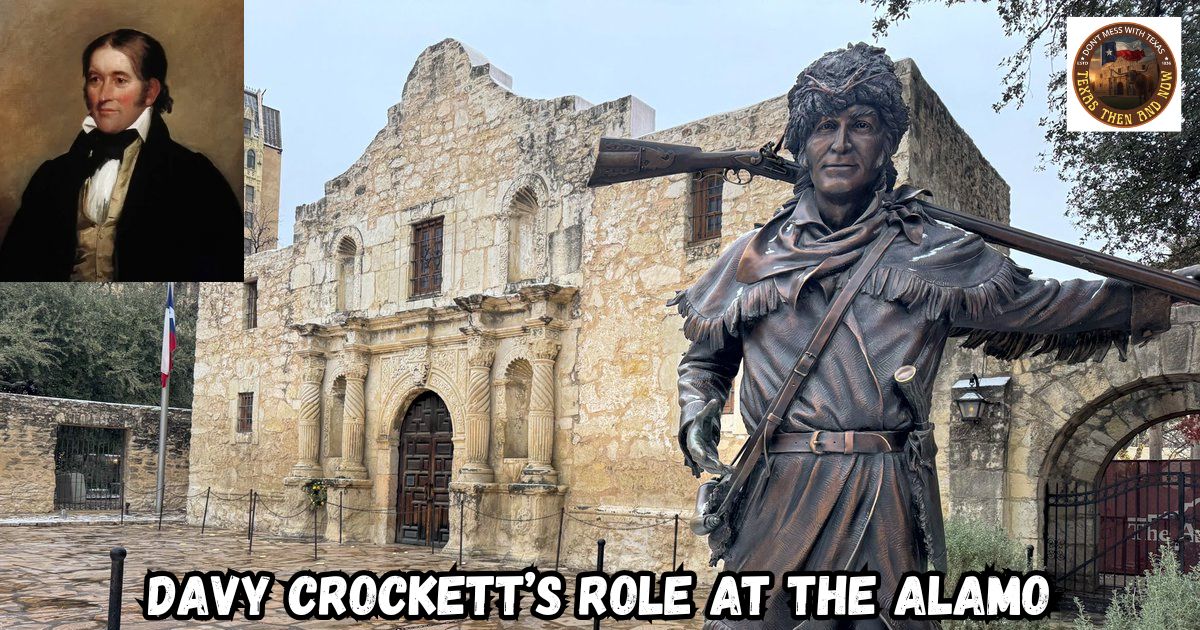
Davy Crockett pops up in just about every conversation I have about the fight for Texas independence. He’s got that mythic status as the buckskin-wearing frontiersman, but there’s a lot more to his story in Texas than just coonskin caps and tall tales.
I’ve spent some time digging into his life and what actually happened in those fever-pitch last days at the Alamo. Here’s what I’ve found about Crockett’s real role in Texas history, from his arrival to the legacy that still echoes today.
The Road to Texas and Why Crockett Left Tennessee
Crockett’s arrival in Texas wasn’t just a random adventure. Before heading west, he’d made a name for himself as a frontiersman, storyteller, and even a congressman in Tennessee. Things took a nosedive for him politically after he lost his seat in Congress in 1835.
He’d stood up to President Andrew Jackson, especially over the Indian Removal Act, and that didn’t win him many friends back home. After losing his election and feeling shut out by his own party, Crockett famously told folks, “You may all go to hell, and I will go to Texas.”
It wasn’t just about politics; he was looking for a new start and maybe even a chance to make good on those land grants being offered to volunteers by the Provisional Government of Texas. For someone who’d spent his whole life exploring new frontiers, Texas offered both a shot at redemption and a place where he could live by his principles.
He headed west in late 1835 with a handful of other volunteers, drawn by both adventure and the Texian cause. When you check out the letters Crockett sent back home, you can track down his sense of hope and newfound purpose.
He hoped that the open land and the promise of liberty would give him the space to live freely and leave behind the bitter politics in Tennessee. The journey to Texas was tough, filled with uncertain travel routes and unknown dangers, but Crockett pressed on, believing his skills as a frontiersman would get him through.
Crockett’s Oath and Early Days in Texas
When Crockett made it across the Texas border, he didn’t just hang around waiting for something to happen. He reached Nacogdoches by January 1836, where he and his band signed an official oath of allegiance to the Provisional Government of Texas.
This deal meant he’d serve in the Volunteer Auxiliary Corps for six months, and it also lined up with the promise of land for those willing to fight for Texian independence. Crockett wasn’t just a follower; he pushed to have “republican” added to the wording in his oath.
That might seem like a small detail, but it showed Crockett wasn’t about trading one kind of tyranny for another. He wanted to support a government led by the people, making sure his loyalty was clear. The move clearly showed he had thought deeply about what he stood for. By stepping up and participating in local meetings and accepting leadership roles among the newcomers, Crockett was setting the standard for what kind of republic he wanted Texas to become.
Heading to the Alamo, Crockett Joins the Ranks
Crockett arrived in San Antonio de Béxar and the Alamo on February 8, 1836. By now, the Texian rebellion was in full swing, and Mexican General Santa Anna’s forces were closing in fast. Despite his background as a colonel and congressman, Crockett didn’t pull rank; he signed on as a private under Captain William B. Harrison.
It’s one of those details that shows his humility and willingness to work as part of the team, not just lead from above. He joined other well-known leaders at the Alamo. William B. Travis, the young commander of the garrison, and James Bowie, the famed knife fighter, were already trying to rally the defenders.
Crockett was a bit older than many of the men there, but his reputation for marksmanship and courage gave everyone a morale boost. Veterans and newcomers alike looked to him for reassurance, and his friendly, approachable attitude made him popular among the entire garrison.
Crockett at the Alamo: Morale and Defense
The siege of the Alamo began on February 23, 1836, and it’s clear Crockett played a pretty active role during those thirteen days. He was known for keeping spirits up with his storytelling, jokes, and larger-than-life personality.
When things got tense, and they often did in that old Spanish mission, Crockett’s attitude kept the mood from spiraling into panic. Travis reportedly said that Crockett was “always animated and encouraging,” moving from post to post and never sitting still when he could be useful.
But Crockett wasn’t just cracking jokes. He and his men took on some of the tougher defensive positions, including the wooden palisade that was pretty exposed. He put his famous long rifle (nicknamed “Betsy”) to good use, taking shots at the Mexican artillery crews and sharpshooters.
By all accounts, his skill as a marksman made a real difference, picking off enemy soldiers and slowing attacks on their weakest spots. Crockett’s presence wasn’t just practical; it also had a symbolic weight, letting the defenders know that even men of national reputation and experience were standing shoulder to shoulder with them.
Personal Connections and Leadership
Crockett’s relationship with the other leaders at the Alamo has always been something I’ve wondered about. While Travis was the official commander, he was pretty young and didn’t always have the confidence of his men. Having someone with a national profile like Crockett around helped.
He didn’t try and take over, but he did get involved in strategy talks and made sure the men felt like they stood a chance. The respect he earned in those desperate days didn’t come from his title; it came from sharing the risks and setting an example others wanted to follow. Crockett opened up to the younger volunteers and encouraged them to stay strong, often sharing stories from his own tough travels and battles.
The Final Battle and Crockett’s Death
The last day of the Alamo, March 6, 1836, is one of those moments that’s passed into legend. There’s been a lot of talk about how Crockett died, and over the years, new accounts have made the story more complicated. Early reports said he died swinging his rifle as a club, fighting it out with a group of Mexican soldiers until the very end.
That version definitely caught on; who wouldn’t want to be remembered going down in a blaze of glory? Later, some evidence turned up that Crockett may have survived the initial assault and was captured, then executed afterward along with a few other survivors.
The diary of Mexican officer José Enrique de la Peña, found much later, hints at this scenario, but it’s still debated by historians. I’ve noticed that, whatever the details, everyone agrees Crockett faced his fate head-on, showing courage and commitment, just doing whatever he could to protect his fellow defenders. The aftermath was brutal, and reports from survivors who escaped before the final attack described the scene with a mix of heartbreak and admiration for those who stayed behind until the bitter end.
What Crockett’s Sacrifice Meant for Texas
The fall of the Alamo was a major shock to the Texian cause. Crockett’s death, along with so many others, started a “Remember the Alamo!” wave that powered the Texian army as they regrouped. In the weeks that followed, Sam Houston’s troops used it as their rallying cry at the Battle of San Jacinto, which really did turn the tide and secured independence for Texas.
The story of Crockett, a man who gave up political comfort in the U.S. to fight on behalf of a new republic, made people look at the Texas Revolution differently, both in Texas and the United States. His sacrifice helped make the struggle seem personal.
People could track down a sense of inspiration in his determination, as he stood up for freedom and ideals even when he could have just gone home. Even today, you can trace the “Remember the Alamo” cry back to Crockett’s courage and recognize how pivotal his presence was for those who fought and for those who would later build Texas as an independent state.
Sorting Out the Truth, Myths vs. Reality
Crockett’s legend took off almost the moment the Alamo fell. Within a few years, plays, books, and even campaign songs were turning him into a near-mythical hero across America. Some of that was real admiration, and some was definitely embellishment. I think the myth and the man coexist.
His real courage and leadership got mixed with tall tales and sometimes fuzzy details, like the famous story that he could “grin a bear to death,” which always cracks me up. Careful research (and a bit of healthy skepticism) helps separate the facts from the folklore.
Crockett’s short time in Texas packs a big punch in history, not because he commanded armies, but because of what his choices represented. He shows how ordinary people making tough sacrifices for ideals like freedom and self-determination can change the course of history.
If you get into primary sources, letters, and credible historian accounts, you’ll find the real Crockett is even more interesting than the larger-than-life version that popped up in popular culture. His persistence, quick wit, and willingness to fight for something bigger than himself are traits historians point to as making him stand out from his peers.
FAQ: Crockett and the Alamo
People are always tossing out pretty good questions about Crockett and his time in Texas, so here are a few that come up a lot.
Why did Davy Crockett really come to Texas?
He wanted a new start after losing his seat in Congress, disagreed with U.S. politics, and was drawn to the promise of land and a good fight for what he saw as a fair cause. Crockett’s adventurous spirit was always looking for a new challenge and a place where he could live by his values—Texas was the obvious next step for him once things soured in Tennessee.
Was Crockett actually a leader at the Alamo?
While he didn’t hold an official command, he definitely led by example and was trusted by both the leaders and the regular soldiers. More than once, he volunteered for the hard jobs and used his experience to keep others in good spirits, showing you don’t need a title to lead when the chips are down.
Is it true that Crockett was captured at the end?
Some evidence, like the de la Peña diary, claims he was executed after being captured, but no one knows for sure. What’s clear is that he stuck by his fellow defenders until the very end. The debate over the details keeps historians busy, but the courage Crockett showed isn’t really up for question.
Davy Crockett’s Place in Texas History Today
Even though he spent only a few months in Texas, Crockett made an impression that’s lasted almost two centuries. His story is part of what makes the Texas Revolution so memorable since it’s packed with bigger-than-life personalities, real courage, and a bit of heartbreak.
When I visit San Antonio or read the letters of other Alamo survivors, I see how Crockett’s role helped turn a desperate stand into a symbol of resistance and hope. The lessons from his life reach beyond Texas, too. Standing up for what you believe in, even after setbacks, is something just about anyone can relate to.
Davy Crockett’s adventure from the Tennessee hills to the walls of the Alamo shows how one person’s actions, grounded in conviction, can echo for generations. That’s probably why folks are still talking about him. As long as stories of bravery and independence matter in America, Crockett’s example will stick around as more than just a legend, but as a true part of the state’s identity, and one that still gives people a reason to check out the story of Texas, time after time.
Most Recent Articles:
- Artists And Writers Who Made Texas Famous

- The Story Behind Texas State Capitol Building
- How Texas Railroads Shaped The State’s History

- Women Who Made Texas History

- Notable Cowboys And Ranchers In Texas History
- Famous Texas Rangers Throughout History
As always, stay safe, enjoy the journey, and please try to leave Texas cleaner than you found it. If you have any comments, questions, ideas, or suggestions, please leave them in the comment section below, and I’ll get back to you ASAP. You can follow us on TikTok @texasthenandnow or YouTube @TexasThenandNow for videos of all things Texas.
P.S. Thanks so much for checking out our blog; we really appreciate it. Just so you know, we may receive a commission if you click on some of the links that appear on our site. This helps us keep our content free and up-to-date for everyone. We appreciate your support!